
Products
Water is an essential resource for various industrial processes. However, the quality of water available for industrial use is not always optimal, and untreated water can have harmful effects on the environment, equipment, and workers' health. Therefore, industrial water treatment plants are necessary to purify and condition water before use. In this article, we will discuss the types, processes, and benefits of industrial water treatment plants.
Industrial water treatment plants are essential for ensuring the quality, safety, and sustainability of industrial processes. They are available in different types, depending on the specific needs of an industry. The processes used in these plants involve various physical, chemical, and biological treatment methods to purify and condition water. The benefits of industrial water treatment plants include consistent quality, increased efficiency, cost savings, and environmental protection. Investing in an industrial water treatment plant can provide significant long-term benefits for any industry.
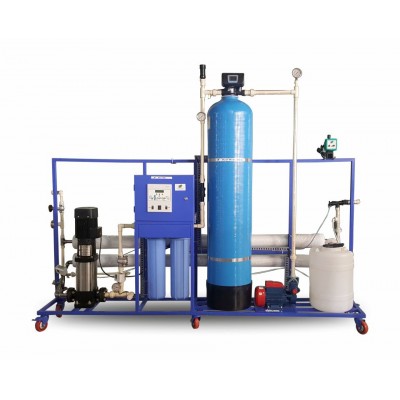
This plant treats raw water sourced from lakes, rivers, or underground sources. The process involves removing physical impurities like sediment, debris, and organic matter.
This plant is designed to remove impurities and prevent scaling and corrosion in boilers. It involves processes like filtration, ion exchange, and chemical treatment.
This plant treats water used in cooling towers, heat exchangers, and air conditioning systems. The process aims to prevent scaling, corrosion, and biological growth.
This plant treats wastewater generated by industrial processes. The process involves physical, chemical, and biological treatment to remove pollutants and make it safe for discharge or reuse.
Filtration:
This process involves passing water through various types of filters to remove physical impurities like sediment, debris, and organic matter.
Ion Exchange:
This process involves replacing unwanted ions with desirable ones through ion exchange resins. It is useful in removing hardness, alkalinity, and heavy metals.
Reverse Osmosis:
This process involves passing water through a semi-permeable membrane that filters out impurities like dissolved solids, salts, and microorganisms.
Chemical Treatment:
This process involves adding chemicals like chlorine, ozone, and UV light to kill microorganisms, oxidize impurities, and prevent scaling and corrosion.


